Stopping The Internet Of Noise – A Useful Internet Back Again

The internet is getting noisy. Too noisy. Having grown up in the nineties, with 56k dial-up, I sometimes struggle to understand how little I'm accomplishing today with all the bandwidth I can leverage.
There were some key factors that made the old internet so productive, by the way, and many of those factors are just gone.
This is not just a rant. I have some proposals as well.
Discussing
Most discussions on the internet once happened in Usenet newsgroups and mailing lists. You could even access mailing lists via NNTP (the newsgroup protocol) using a great service like gmane.
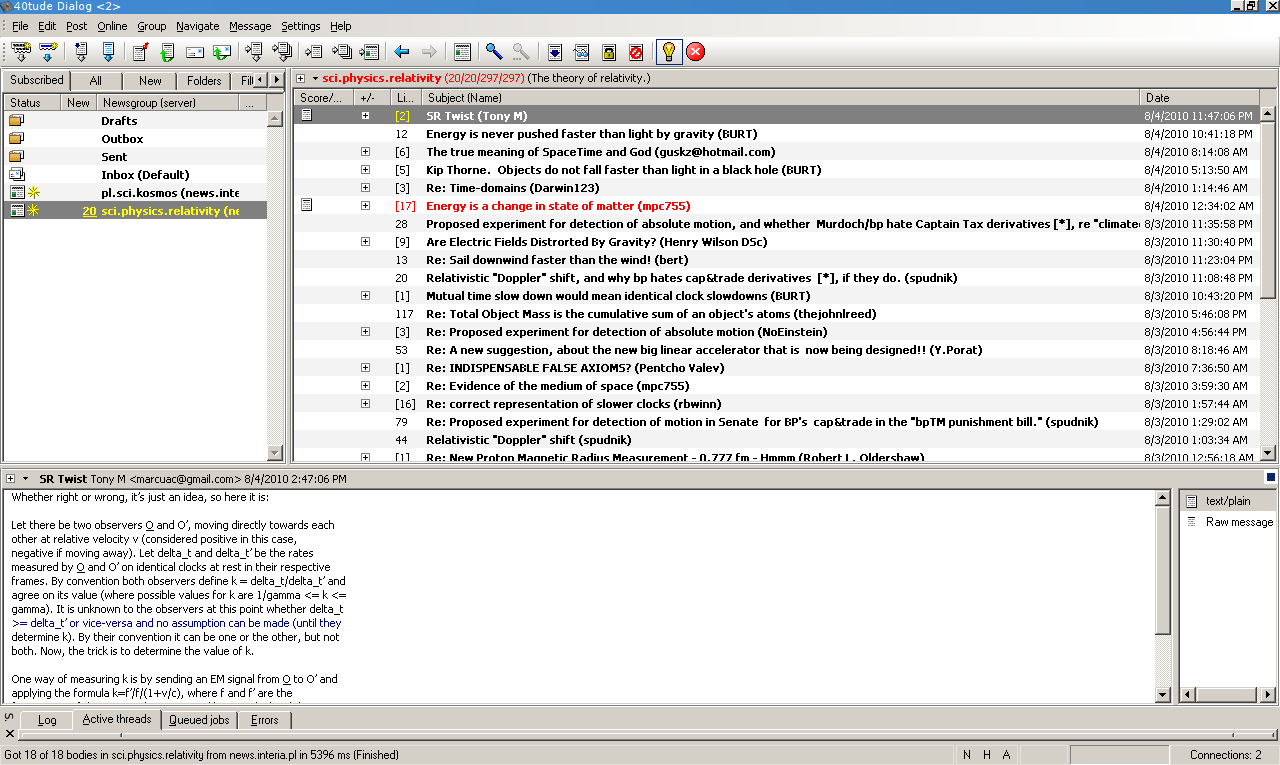
40tude Dialog was my favourite newsreader at the time. I could subscribe to a lot of different newsgroups, without needing to sign up for each of them, and it was very easy to catch up with lots of traffic – just a matter of checking which messages had still the title in bold.
There was a single application with a consistent interface to access the most disparate groups, and topics were widely enforced – probably the most common complaint from newsgroup users was that somebody was off topic – such discussions were quickly criticized and got little attention.
Chatting
There once was IRC, the Internet Relay Chat. mIRC was the king of clients for a while.

IRC, sometimes, was not great, lacking some advanced features for multimedia and emojis, but it was good. There were plenty of channels with specific topics, and you could join them in a second.
Then, other instant messengers picked up – ICQ, MSN, AOL, etc – but it wasn't a great issue; the protocols they used were mostly simple, and tools like Trillian and Pidgin/Adium quickly reversed them and let the users just pick one client with multiple connections. Skype was a bit of a white fly because its original protocol was harder to reverse.
Again, there was an easy way to get a consistent interface in a single application to chat on IRC, Google Chat, Facebook Chat, generic XMPP, and so on.
Getting notified about updates
Oh, this is was easy, wasn't it? RSS and Atom just ruled the world. Bloglines and the beloved Google Reader were the first stop, every morning, for many developers.
Some blogger just putting too much shit on its blog? We remove him from our feed! No matter what!
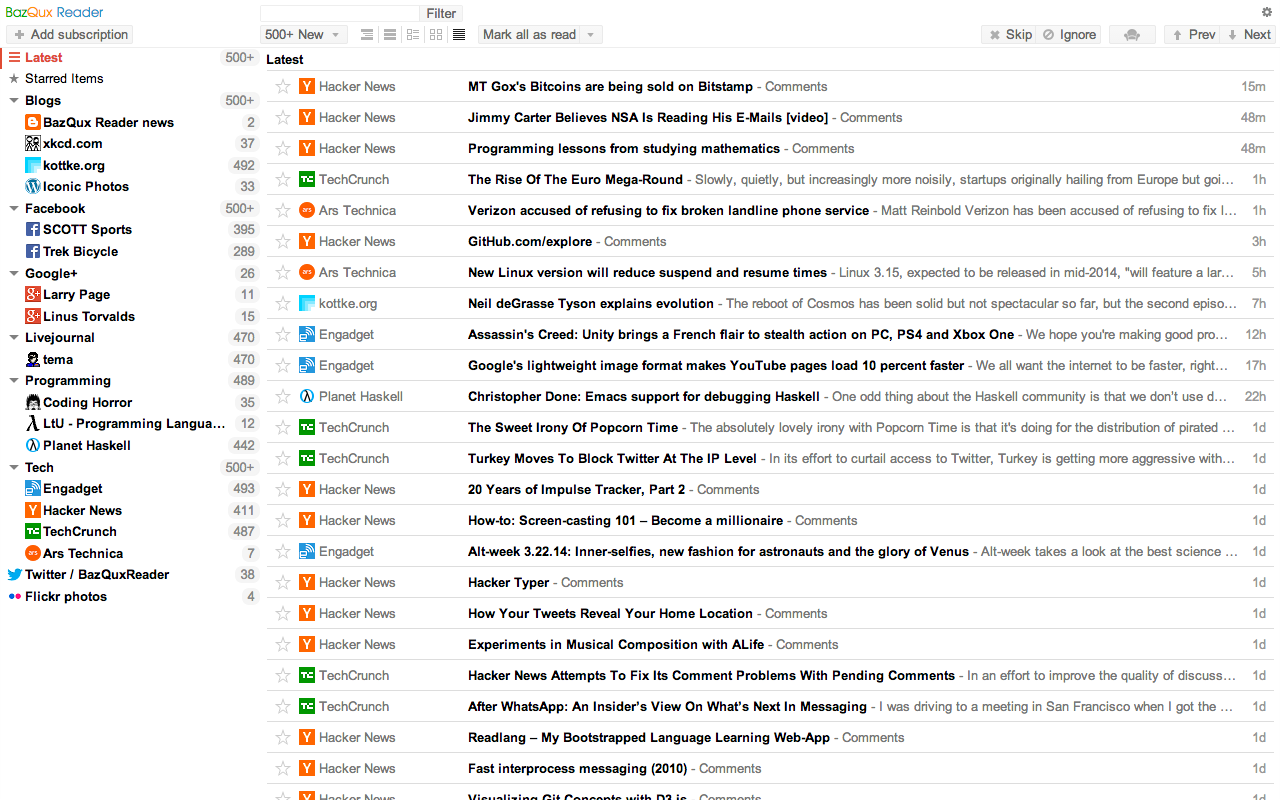
We could simply pull our update sources within one single application, and check all the updates when we had the time to.
I can remember my workflow: scroll through the sources, open any interesting article in a new tab, mark all feeds as read; then go through the tabs until I finished. Job done. I could, at the same time, read a lot of interesting thing and discard a lot of uninteresting shit.
What happened
If you take a look at was the state of things, you can notice that:
- Focus is lost; once, everything went around topics. Channels had topics; newsgroups had topics; blog had topics (one great rule for a blog was to have a 'razor sharp' focus). Nowadays we have people instead of topics. I have nothing against people, but maybe, if I follow a great software architect, I'd like to hear what he's got to say about software, not about other shits.
- There are multiple platforms lacking an API: nowadays I'm forced to switch between Slack, Telegram, Whatsapp, Discord, Skype and whatever IM is going to be the most hip tomorrow. There are hundreds of forums – maybe the retain a topic, but they don't offer a consistent way of pulling content into a single application. Facebook and Twitter – while there used to be some apps that allowed integrating such feeds into a single app, they're long gone as far as I know. StackOverflow mitigates the issue with an acceptable RSS feed, even though it's not as customizable as I'd like. Many websites just stopped offering RSS feeds at all, or stopped making them customizable, and just push their updates – ALL of their updates – on Facebook and Twitter. I used to be an avid Lifehacker reader, back when they had category-based RSS feeds, but at once... they just stopped providing such service.
- Can't mark things as read. Have you ever noticed that? Inbox Zero once was a good practice for every workflow. Facebook and Twitter simply don't allow this functionality. You cannot mark a tweet or post as read, it could resurface at any time. And you cannot see which posts or tweets you've not read yet – probably because the amount would be simple overwhelming. You need to waste your time on such websites.
Where we want to go
We want to reverse all this. We need:
- Topics. Google Plus created somethings similar to that with Collections (without RSS, of course); or we could just create a blog or username for each of our topics – I think most of us won't discuss about so many totally unrelated different fields. It's a change of mentality – we shouldn't write something just because we can. Unless we are celebrities, people, especially strangers, won't follow us just for the sake of it – we need actual, quality content. Smallchat is fine on FB or Twitter.
- APIs. I'm not saying we should get back to IRC or to NNTP. But we need a common API for Instant Messaging and forum-like software, so that people can use their favourite tools to organize their data sources. Installing tens of apps or visiting tens of websites every day is not an option.
Incidentally, this is not a call for the open internet; I could not care less if there's a leading provider for content, as long as such content is accessible in a standard way.
This is a call for a useful internet back again.
(Incidentally, this is not the usual focus of this blog, which is mostly technical. But I hope my audience will forgive me, this is something important, IMHO).
EDIT: an interesting discussion arose on Hacker News